The Magic of Dancing Into Spring

The Magic of Dancing Into Spring

Christopher Croucher, Stormdancer

March 30th, 2025

“Come join in the dance of spring, to dance the earth into life again!”
—Will Rowan, The Dance of Spring, 2021

We are now past the Equinox, the marker of springtime in the Northern Hemisphere, and while the weather patterns may be shifting and teasing and playing with our emotions a bit, we know that the Wheel is turning and we will be celebrating the Spring very soon. There is a powerful magic in that anticipation, the waiting that brings about a (hopefully) satisfying breakthrough as we finally enter the glorious time of Goldilocks-style “just right” days.

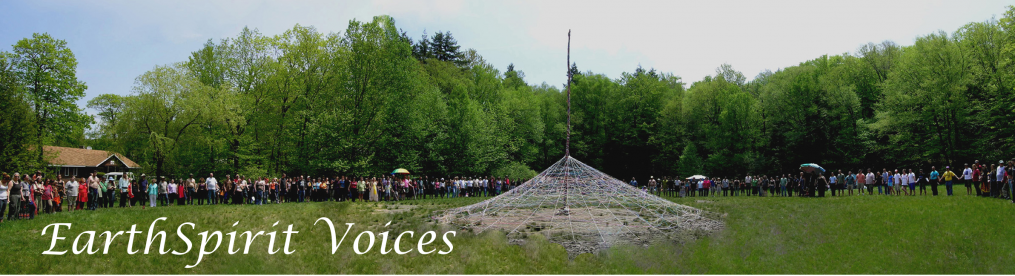
As a dancer and a witch, I’ve been pondering what it means to dance into this coming season, particularly in a year when dancing and celebrating might feel at odds with what’s going on around us. Will Rowan’s song The Dance of Spring, which we sing in a sacred circle dance every year at Rites of Spring in the EarthSpirit Community, has been wandering through my mind. It calls us to join in the dance to “dance the earth into life again.” We “stamp [our] feet and lock [our] hands and weave [our] song into the land.” As the community triple-steps in concentric rings in this traditional dance of Brittany called an An Dro, I like to picture the beating of our feet breaking open the soil that was recently frozen, planting our song and our community in the soil and allowing the potential of spring to break through into new growth.

This, in and of itself, is a magical act that can be reproduced individually or in community, and really in any season though it’s particularly perfect for Spring, by dancing, walking, and drumming on the land. It’s an intentional act of beating the ground to wake up potential. You’re knocking on the door to the Otherworld with your feet, raising magic from within the earth to imbue your intention with the driving force it needs to take root and grow. It’s a simple and elegant form of magic that needs nothing but a little bit of movement and your breath.

It is also worth noting that we sing this song and do this circle dance every year to begin our Community Web Ritual in which we weave a web of connection out into the world. This is where “dancing into spring” gets really interesting…

Eminent mycologist Paul Stamets has claimed a theory that mycelium, the networks of fungi that are now shown to support the foundations of life on Earth, may tend to grow where humans have celebrated. Studies have revealed that mycelia respond to music and low-level vibrations which suggests that the music, drumming, dancing and pounding feet on the ground in our Springtime revelries are stimulating the growth of this fungal network. Being that these interconnected roots support the growth and thriving of life on our planet, in our Dance of Spring we really are, quite literally, dancing the earth into life again while weaving a web of connection under the soil.

 So right now, what does it mean to dance into the Spring? Winters can feel harsh and isolating, as can the world in difficult times. Spring is often seen as the embodiment of the freedom that comes when the iron grip of Winter loosens. Right now, after what for many of us has felt like a particularly dark Winter, it may seem counterintuitive to celebrate the Spring when many of the metaphorical tendrils of ice continue to grip at us with little hope of relenting in the near future. These webs of connection that our Springtime magic weaves are a lifeline, a symbol that we are here for one another and for the world in whatever ways we can be as part of a Web that can support us all. In my personal magical belief, the magic that we make in that circle, dancing and singing and weaving the Web together, is a literal force in the world that is a power for blessing and change. I hope that, with all of these layers of Magic and science to show us how potent our celebrations really are, we can see this act of gathering and dancing and welcoming in the Spring as the powerful act blessing for the world that it really is and that we will joyfully “dance the earth into life again” very soon.

Stamets, Paul. (November 22, 2023). There are time honored traditions and celebrations [Post]. Facebook. https://www.facebook.com/PaulStamets/videos/there-are-time-honored-traditions-and-celebrations-that-create-sounds-and-vibrat/1292344501263582/

Pisces III: A time for the Lesser Mysteries

Pisces III: A time for the Lesser Mysteries

by Andrew B. Watt

Editor’s note: The zodiac divides the sky into 12 signs of 30º each. An ancient subdivision of these 30º signs is into three “decans” (from the word for “ten”), or 10º segments. Each year, ten days before the Spring Equinox, the Sun reaches the third decan of the sign of Pisces, before beginning the astrological year again as it enters Aries at the Equinox. This post was written specifically for this third decan of Pisces.

This time of year, I find my thoughts drifting back to something my friend Sara Mastros said about visiting Greece in February. She got into a cab one day at her hotel, and told the cab driver to take her to Eleusis, about fourteen miles away. The driver, once he understood her request, nodded and sighed. “There, it will already be spring.” In downtown Athens, she said, this was a hard statement to credit —it was cold and blustery, with an extra needle or two of frost in every breeze. But, once there, she found it impossible to ignore — there was new greenery everywhere, and flowers were starting to open in every sunny sheltered place around the site of the ancient Telasterion, the hall where the Mysteries of Eleusis were celebrated.

It was already spring there.

Of course, the Greater Mysteries of Eleusis were celebrated at the start of the ancient month of Boedromion. Called “The Showing” and open only to initiates, it was a multi-day ritual that we know only a little bit about, and some of that only from Christian apologists attacking it as pagan nonsense. The season of these Mysteries began on the 14th day of Boedromion, and probably at or just before the Autumn Equinox, and with particular pomp and circumstance every four years. We know that these rites involved the story of Hades kidnapping Persephone, of Demeter’s imposition of the first winter on the Earth, and Zeus and Hermes negotiation of a truce.

But by the 7th century BCE, the Mysteries were already so old and full of archaic language that people barely knew what they were witnessing. And sometime in the century or so that saw the elevation of Homer’s Iliad and Odyssey to cultural prominence in Greece, the priestly families that oversaw the Eleusinian rites established the Lesser Mysteries. These lesser mysteries, called “the Teaching” or “The Telling”, were also only open to would-be initiates, who sent a donation of a piglet as an offering to the Telasterion and its attendant families as the price of initiation.

This Telling was held at this time of year, in our mid-March before the Spring Equinox, in the Athenian “month of flowers” — and they were a catechism of sorts, a multi-day series of rituals, sacred meals, purifications, lectures and discussions about what would be received by the initiates at the Greater Mysteries. Once inducted, attendees then were eligible to participate in the Greater Mysteries eighteen months later, where they would have the background and intellectual framework to understand the experiences that the initiates went through in the autumn.

It sounds a lot like a modern pagan gathering, with rituals interspersed with workshops, doesn’t it? And how many of us had the depth of knowledge to understand our first pagan gathering? How many of us needed to come a second time, or a third, to really understand what was going on?

Of course, our rituals today are not the same. At Eleusis in the fall, we know there was “an ear of grain in silence reaped” — there was a mass washing of people at a beach, and a night in complete darkness, and a sacred drink in the dark, and a chest or box with sacred secret things in it, and a basket whose contents are similarly obscure to us today. And our rites and rituals are not so obscure or ancient to us that we have to hold special training sessions eighteen months ahead of time to have clarity about them.

But. All the same?

It’s not a bad idea to use this time of year to reflect on our own mysteries — not the Mysteries of what this object or that ancient text might mean to us as pagans today; or how to interpret the strange symbolism of rituals that haven’t been performed in almost eighteen hundred years.

No — instead, let’s take the time to talk about the Mysteries of how all life on Earth is dependent on the interrelationships of Sun and seed and soil, of rock and planetary orbit and seasonal shifts in daily sunlight, and the way that the dead provide both the fuel and foundation for new life. We can couch it in myth — like Persephone and Hades and Demeter and Helios — or in the most up-to-date scientific lingo we can.

But at its heart, this is still a mystery we humans understand only a little. And we deserve to be reminded of it, again and again — and perhaps most especially at this time of year, when the equinox is not yet come and the trees are still bare of leaf or blossom. This is the time of year when we most benefit from the reminders and the explanation, of course — because in summer and in autumn, the bounty of this transformation is obvious. Now we need to Tell ourselves the story, because the Show will be so obvious, later in the year.

And perhaps this is the reason to mark the Lesser Mysteries now, at this time of year when it’s still gray. It’s how we make spring come early in our hearts and minds, and bring a little of the mystery of Eleusis into our life.

There, it is already spring.

Photo of a stone church in Eleusis, Greece, on top of a rocky mound, with blue skies above.
Eleusis. Photo by Vassilis St on Pexels.com
Heathen Holidays: Eostre

Heathen Holidays: Eostre

by Trey Wentworth

This is the third blog post in a series on the topic of Heathen Holidays.

In February we began to really see and feel the lengthening of days as we moved away from Yule. Now, the seasons are indisputably changing – in warmer places, flowers are coming up, and even in the cold mountains of Vermont where the snow lingers, it’s finally melting faster than it falls and the air has the smell of spring. In Heathenry, we feel the subsiding of the Wild Hunt that rules the winter, and nights become less dangerous, making space for the beings of the land to flourish once more.

Today, our calendar marks four seasons, but the Venerable Bede tells us that “originally, [the English] divided the year as a whole into two seasons, summer and winter, assigning the six months in which the days are longer than the nights to summer, and the other six to winter.” These months were tracked according to the moon in a lunisolar calendar, information confirmed by Icelandic and other Germanic sources to be a pan-Heathen method of reckoning time. With the coming of the April moon, we transition at last into the summer season, and the “light half of the year.”

As ever, different branches of the Germanic people celebrated this time in different ways. In Scandinavia, they performed a Sigrblot – a victory offering – while in Old English custom, this tide was called Eostre and perhaps centered around a deity by the same name. While academics and pagans debate the historicity of Eostre and her worship, it is indisputable that today, many modern Heathens have found potency in venerating her as one of our gods.

Who is Eostre?

It is not incidental that the Old English name Eostre looks so similar to our word Easter. Most European languages derive their name for this Christian observance from the Hebrew word Pesach – but English, Dutch, and German all retain this same Germanic root, giving rise to Easter, ooster, and Ostern. Clearly this celebration was of particular importance in West Germanic Heathenry! Linguists have proposed that the Old High German equivalent word would have been *Ostara, a familiar word today as it was used in the modern Pagan Wheel of the Year to denote their spring celebration (though they also moved it a month earlier to align with the equinox).

The word Eostre is related to the word east, and derives from a Proto Indo-European root meaning “dawn.” Rob Schreiwer has collected a Pennsylvania Dutch story Oschdre (Where Color Comes From; Origin of the Distelfink), where the figure Oschdra, equivalent to Old English Eostre, is responsible for manifesting the colors of the dawn sky as she walks between her sisters Day and Night.

While few snippets of lore around Eostre remain, she is clearly far more than a simple seasonal figure appearing only at springtime. Instead, she brings the dawn of each day, and the spring is hers because it is the dawning of the year itself. Folklore also suggests a connection with running and welling waters and their magical healing properties.

One folk symbol that has become beloved on Chase Hill at this holiday is that of the Osterfuchs – the Easter fox – who seems to be an older being appearing at this season, eventually displaced by the later and better known Easter bunny.

Celebrating Spring

With the ending of winter, there are many rituals needed to close out the dark half of the year and look toward our summer work. Now that the Wild Hunt’s ride is over, it is safe to call on the spirits of the land once more. After the April full moon, we again put out any statues or garden plaques (such as a Green Man, Wood Wife, or other symbol of the animating forces of nature) knowing that they are safe from being harried by the Hunt. If you saved a symbolic token of your harvest such as a Harvest Queen, she should be buried in the ground at this time to return that fertility to the earth for the coming season. And, of course, we give offerings to the land as well – mead, bread, and eggs to feed the earth with our gifts and our gratitude, in the hopes of a bountiful summer.

German folklore tells us that Easter dawn is an especially potent time for healing rituals. Drawing on these old customs, specially appointed Eostre Attendants wake early before our ritual on Chase Hill, dress all in white, and draw water from the well in silence as day breaks. This water is poured over the hands of everyone at our ritual to help wash away whatever wounds we carry from the long dark of winter. If you have a local spring, well, or stream, you can easily draw your own healing water, so long as you set an early alarm! Wear white to honor Eostre, and don’t speak aloud until you have your water. Make sure to check the potability of your water source before deciding to consume it – but even non-potable water can be used for ritual washing.

Eostre is a time of hope and beauty, with flowers, light, and longer days. But spring was still a harsh time for pre-modern people. This is the so called “hungry gap” between the ending of winter and the first harvests of summer. Local New England lore tells us that the serviceberry tree is so named because when it blooms the ground has thawed enough to bury the bodies of those who died over the winter. Eostre’s arrival in springtime is not one of unfettered joy, but instead a time when we need to catch each other in our ragged post-winter daze and find softness, healing, and a place for the griefs we have endured in the last six months. Only by finding community and gentleness in spring can we recover enough to stand up for the work that summer will demand of us.

Gardening with the Sacred Earth

Gardening with the Sacred Earth

By Katie LaFond

The abundance of life and webs of nourishment in the land where I live are fascinating and ever changing. Whether we are tending a hardy houseplant or doing our best to grow much of the food we eat, we are forming relationships with plants, critters, and fungi, and it is a wonderful way to deepen our relationships with the Sacred Earth.

The first thing to do is to become acquainted —and comfortable—  with failure. 

The ability to fail successfully is incredibly empowering. If you’re just getting started with a garden, you will make mistakes. The way you dance with those mistakes may determine how deep your relationship with your garden will be. I have grown so much from my gardening fails. 

“Listen” as much as you “do.”

Spend time just observing in the garden. Sit in it, make it a beautiful comfortable place with flowers and plants you love, and have a comfortable chair. I have a section of the garden that my toddlers were allowed to dig in and it became a place we all wanted to be. I would notice what plants were doing well (those sunflowers really love that sunny spot!) and what plants didn’t seem too happy (is it too hot for those peas?). Before you even decide on a spot to plant things, spend time outside, observing how the light and water move through the day and seasons, and where the snow melts first. I also enjoy planting phenology, or watching for signs for when to plant things. Blooming crocus means it’s time to plant spinach. Daffodils are blooming when it’s time to plant beets.

Honor your boundaries and needs. 

Some of us have a lot of time and energy, and a large garden with orchards and a flock of chickens makes sense. Others feel stressed out just by the thought of maintaining all of that. You are part of the relationship you’re building with the land. Listen to your needs and desires as you make decisions. 

Enjoy your first date.

Speaking of desire, plant things that will bring you joy. I love eating tomatoes, I love fresh flowers on the table, and I am amused by fast growing plants, so the first year we lived at our home in the Hilltowns I planted tomatoes, flowers, and peas, and I mulched my plants because I don’t enjoy weeding. Listen to yourself, and get your hands dirty. 

Commitment and perennials

Perennials are fantastic; herbs, asparagus, berries, and walking onions are some of my favorite friends in the garden, but they take time to establish. Take time to listen to where the plants want to be, think about where you can realistically commit to tending them regularly, and make the decision together. You can always replant, but it will take a couple years for them to sleep, creep, and then leap again. 

Plants have friends and frenemies too

We all have different needs and wants, and some needs conflict. If you observe and remain open to your plants, they will often let you know if things are (or aren’t) working for them. I had a close call with planting some trees one year; the town offered a group rate on purchasing black walnut trees, and I liked the idea of nut trees on the land where I live. After I placed an order, I had a strange dream and a gut feeling that I should google walnut trees, and in fact, tomatoes won’t grow near walnut trees (walnuts create juglone which is toxic to tomatoes). My friend was two trees richer, and my tomatoes were glorious that year.

Begin to think in circles and webs. 

So often, we think of input and output, and cause and effect, as if things have a beginning and an ending. Healthy relationships, like the ones we’re building with the land, are often more complicated. Listen and open to the Earth, nourish your relationships with it, and let it guide you as you plant, feed your soil with organic matter, encourage mycelial webs to stretch out their fingers to tickle roots, and dance with water flow in your garden. Notice what grows well and look up what it is telling you; different plants grow well in different conditions. If you notice that chickweed is abundant, perhaps your soil is compact, and you might want to grow some daikon radish to loosen the earth a bit. Have tea with the bees and plant flowers, bringing cycles of fertility to your garden and beyond. Feed the worms and microbes with compost, and then let them be; digging disrupts the fascinating and fertile communities that live beneath the surface.

As we in the Northern Hemisphere turn again towards the bright half of the year, I’m looking forward to the sleeping land waking up and stretching new green to the sky. I’m looking forward to warm sweaters and looking for the first snowdrops poking their heads through the snow. I’m looking forward to seeing how huge my heat-loving pepper plant will grow in the microclimate I have near the bricks and asphalt, and I’m looking forward to my children’s faces smeared with dirt and raspberries, with spinach in their teeth. Our relationship with the Sacred Earth is a blessedly messy one, and I wish you all the luck with your plant relationships this year. 

In the Spirit of the Earth,

Katie LaFond

Massachusetts, March 2023

Deep Peace Meditation

by Deb Banks, daughter of Janet

This piece was written for Deep Peace, our celebration of mothers, in 2018.

Close your eyes
And settle your mind
Taste the spring air
Smell the wet soil
Hear the stream full and rushing
Feel you feet on the ground
Our roots go deeper than
We will ever know

Hidden from our view
Roots, seeds and all manner of being
Are held by our Earth Mother
Until it is time to arise

Never too early
Never too late
Always arising at the moment
When She knows
It’s time
She does not think
Or overanalyze
If the time if right
It just is

She does not stop to worry
If all the pieces will fall into
Their proper place
They will

She does not fret that it will not be
Easy
It won’t

IMG_0921She is not afraid
Of failure
It’s not a matter of being perfect
She isn’t

Each time
The beings arise
They are
Different

Reshaped
By their
Experiences
Never the same
And no two ever alike

A flower with
A slightly different color
A berry that is sweeter
Because of more rain
All perfect in their
Imperfection

We don’t seem to question this
About our Earth Mother
We trust in the system of Nature
To Know.

How would we be different
If we trusted
Ourselves to know
When that time
Was right
To arise?

I invite you
To open

Open
To the possibility
That you
Know

Open
To that which is in you
Ready to arise

Open
To the possibility
That this time
The story may be
Different

Open
To the hope
That we can sense all around us

Open
To the mystery
Of what is to come

Open
To yourself
And Arise!